You get home from a great trip, open your card statement, and have no idea where half of it went. It is the most common travel-money regret there is - not overspending exactly, but losing track. Tracking expenses abroad is harder than at home for real reasons: two or three currencies in play, a mix of cash and card, and the last thing you want to do after a long day of sightseeing is maths. Here is a system that removes all of that, without a spreadsheet in sight.
Why tracking abroad is harder than at home
At home, every expense is in one currency and mostly on one card, so your bank app is a decent record on its own. Travel breaks all three of those assumptions at once:
- Multiple currencies: a flight ticket booked in euros, a hotel booked in your home currency - your statement is a jumble of conversions you did not choose.
- Cash and card mixed: the cash you withdrew shows as one ATM line, then vanishes into dozens of untracked small buys.
- Decision fatigue: after a full day out, nobody wants to reconcile receipts.
The fix is not more discipline at the end of the trip. It is removing the work from each individual expense, so tracking never becomes a chore worth avoiding.
Log every expense the moment it happens
This is the whole system, and it is almost too simple: record each expense the second it happens, not later. The taxi as you step out. The meal as the bill lands. It takes ten seconds while the amount is in front of you, and it removes every "what was that?" from your future.
Do it in the moment and you never have to remember anything. Skip it, and by the end of the week you are reconstructing a spending diary from memory - which is exactly how trips end up "somehow" costing more than planned.
Track in the currency you paid - convert once
A classic mistake is doing conversion in your head at the point of sale and logging a rough home-currency figure. Those guesses compound into a total that is quietly wrong. Log the exact amount in the currency you actually paid, and let one consistent conversion happen afterwards.
That is exactly how expense tracking works in MyTripDude: record each expense in its own currency, and every entry rolls up into a single home-currency total for the trip. You see both - the real local amount you paid, and what it all adds up to back home - without ever doing the arithmetic yourself. It is the same principle behind building the budget in the first place, which we covered in how to plan a trip budget.
Use categories to see where money actually goes
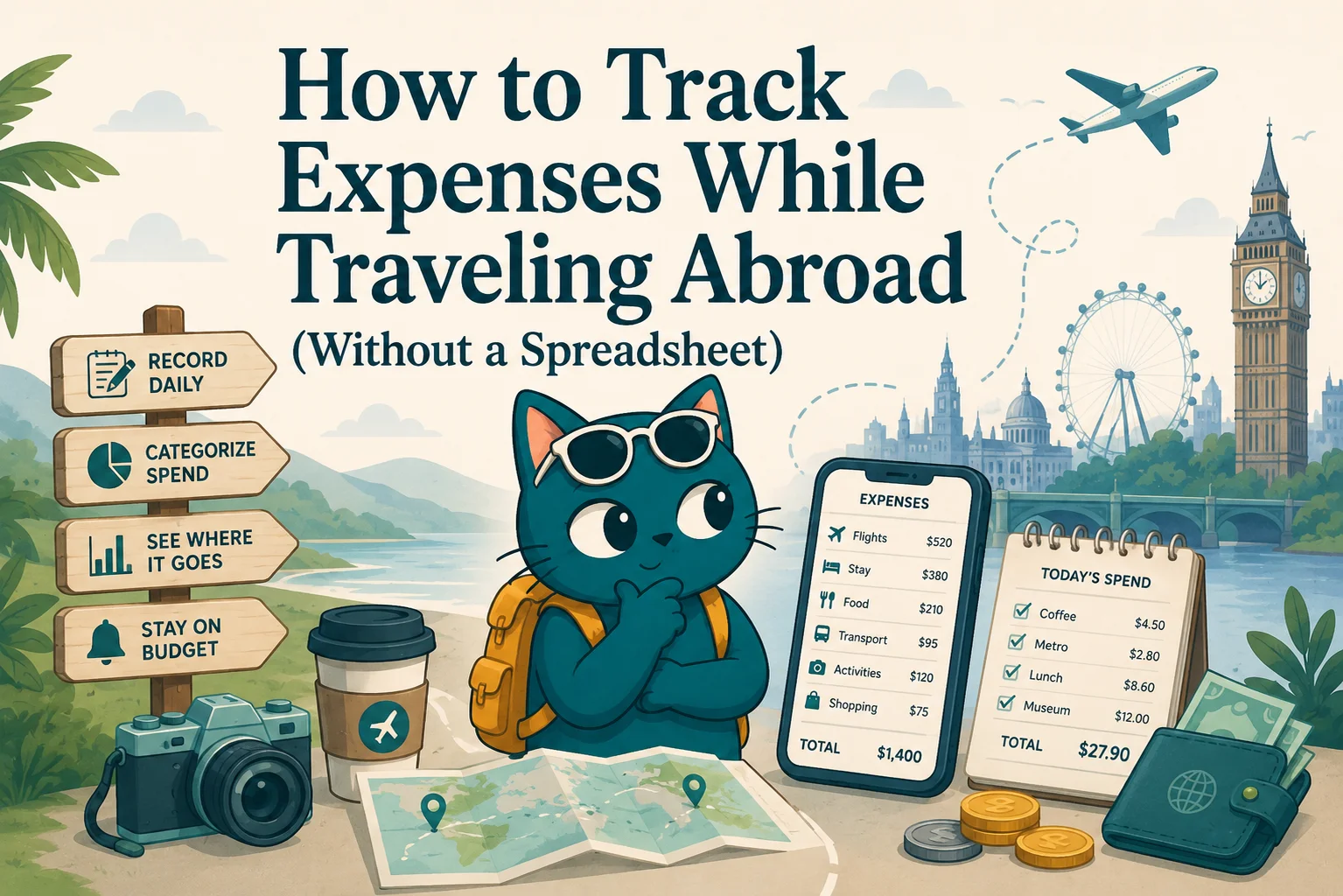
A running total tells you how much - categories tell you where, which is what you actually need to make decisions mid-trip. Tag each expense to a category (Food, Transport, Stay, Activities, Shopping) and patterns appear immediately: the trip is not expensive, the dinners are; the flights were fine, the taxis added up.
With that visibility you can course-correct while it still matters - cook one night, walk instead of cab - instead of discovering the imbalance after the money is gone. Categorised spending is also what turns a pile of expenses into the insights that make your next budget more accurate.
Why an app beats a spreadsheet on the road
A spreadsheet works fine at a desk. On the road it fights you: fiddly to open one-handed at a food stall, no live currency conversion, easy to fat-finger, and completely separate from your bookings, itinerary and documents. The friction is enough that you stop updating it - and a tracker you stop updating is worse than none, because you trust a number that is no longer true.
A purpose-built trip app removes that friction: logging is a couple of taps, conversion is automatic, and your expenses live in the same place as everything else for that trip. This matters even more on international trips, where the currency gap is real - see our domestic vs international trip planning guide for how that difference plays out.
Frequently asked questions
How do I track expenses in multiple currencies while traveling?
You can log each expense in the currency you actually paid, then let a tool convert everything to your home currency once, consistently. MyTripDude helps you record expenses in any currency and rolls them into one home-currency total per trip.
What is the best way to track cash spending abroad?
Log cash expenses the moment they happen, because unlike card payments they leave no trail. Treat the ATM withdrawal as a source, and record what you actually spend the cash on as you go.
Should I use a spreadsheet to track travel expenses?
A spreadsheet works at a desk but is awkward on the road - no live currency conversion, fiddly one-handed entry, and separate from your bookings. A trip app makes logging a couple of taps and converts automatically, so you actually keep it updated.
How often should I log my travel expenses?
Every time you spend, in the moment. It takes about ten seconds while the amount is in front of you and removes all the guesswork later. Batching it to the end of the day or the trip is where accuracy is lost.