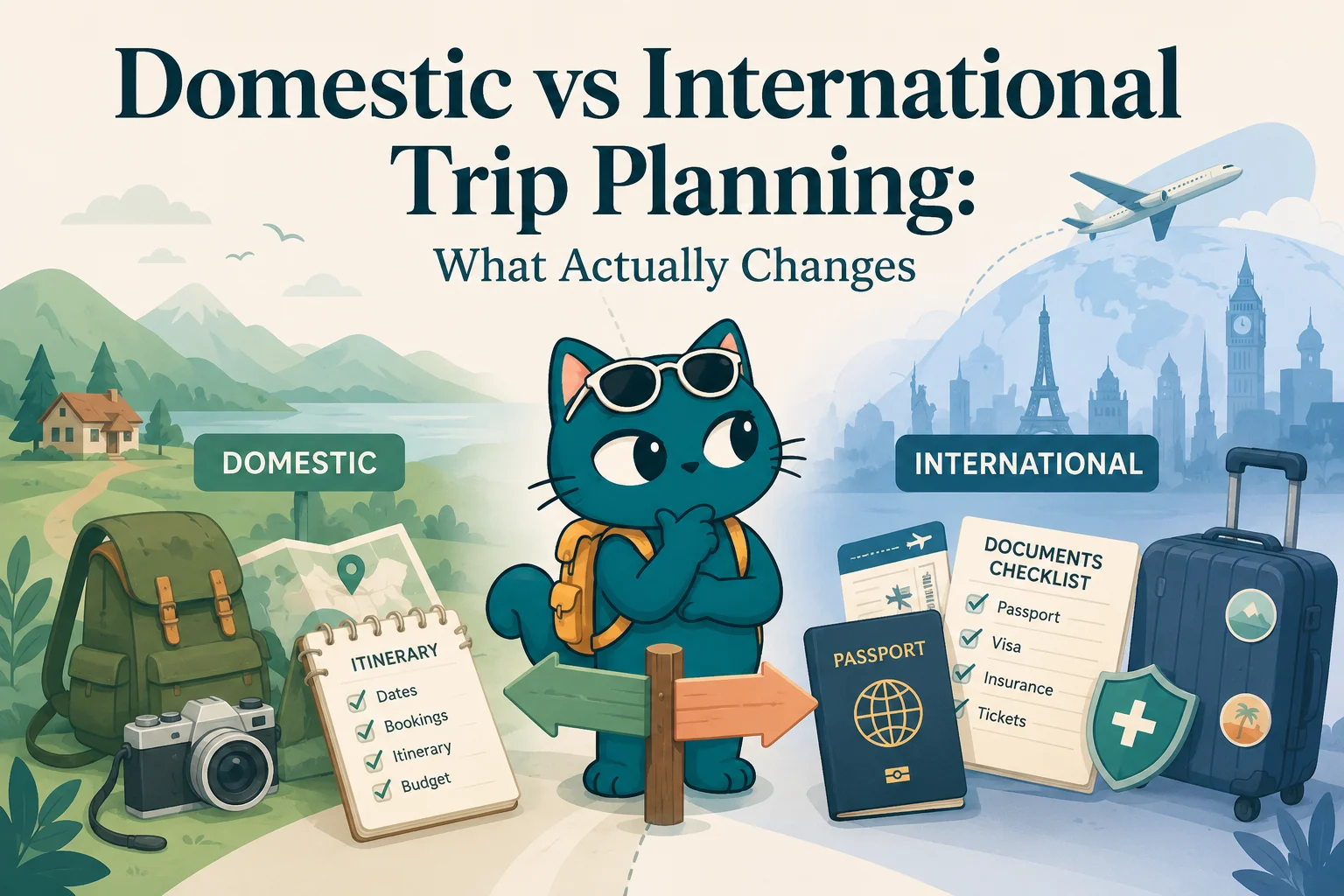
A weekend in the hills and a two-week trip overseas are both just "trips" until you start planning them. Most of the process is identical: pick dates, book a stay, plan the days, set a budget. But a handful of things change completely the moment you cross a border, and those are exactly the things that catch people out. Here is what actually differs between domestic and international trip planning, so you give an overseas trip the extra prep it needs without over-thinking the parts that stay the same.
What stays the same
Start here, because it is most of the work and it does not change with the destination. Whether you are planning a domestic or international trip, you still:
- Choose dates and book transport and accommodation.
- Build a day-by-day itinerary of where you want to go.
- Set a budget and track what you actually spend.
- Keep bookings and confirmations somewhere you can find them.
If you have a system for this at home, you already have most of a system for travelling abroad. The international extras bolt on top - they do not replace anything.
Documents and entry requirements
This is the biggest difference. A domestic trip needs little more than a government ID. An international trip adds a whole layer: a passport valid six months beyond your travel, the right visa, travel insurance, and sometimes proof of onward travel or vaccination.
None of it is hard, but it is unforgiving - miss one item and you may not board. Run through our international travel documents checklist as soon as you commit to the dates, because the fixes (passport renewal, visa processing) take weeks, not days.
Budgeting across two currencies
At home you budget and spend in one currency, so your budget and your bank balance speak the same language. Abroad, you earn in one currency and spend in another, and the gap between them - conversion rates plus foreign-transaction fees - quietly inflates every expense.
That is why an international budget needs two things a domestic one does not: a realistic conversion buffer, and a way to see spend in both the local currency and your home currency at once. MyTripDude handles this directly - a trip can carry separate domestic and international budgets, and expenses logged in any currency roll up into a single home-currency total, so "how much have I actually spent?" stays a straight answer. The mechanics of building the number are the same either way; see our how to plan a trip budget guide for the step-by-step.
Time taken to plan and book for the trip
Domestic trips are forgiving on timing - you can plan a good one in a week, and last-minute is often fine. International trips run on a longer clock, and the order matters:
- Check passport validity and visa requirements - this gates everything else.
- Book flights once you know the visa is realistic for your dates.
- Arrange travel insurance (some visas need it before they are granted).
- Book accommodation and any must-do experiences that sell out.
- Build the day-by-day itinerary and budget last, once the fixed points are locked.
Reverse this order and you risk booking a non-refundable flight for dates your visa will not cover - the single most expensive planning mistake there is.
One system for both
The goal is not two separate planning processes - it is one process that knows which kind of trip it is dealing with. Mark the trip as domestic or international up front, and the extra requirements (documents, second currency, longer lead time) simply switch on.
In MyTripDude every trip has a type and its own budget and currency setup, so the same tabs - itinerary, expenses, documents, checklist - carry you through a weekend away or a month abroad. You learn one workflow and reuse it for every trip, instead of reinventing prep each time. See it all on the features overview.
Frequently asked questions
What is the main difference between domestic and international trip planning?
The planning process is mostly the same - dates, bookings, itinerary and budget - but international trips add documents (passport, visa, insurance), a second currency to budget for, and a longer lead time. Those extras add on top of your usual process rather than replacing it.
How far in advance should I plan an international trip?
Start as soon as you have dates, because passport renewal and visa processing can take several weeks. Check passport validity and visa rules first, then book flights, arrange insurance, and finalise accommodation and itinerary once those fixed points are locked.
How do I budget for a trip in a foreign currency?
Add a conversion buffer for exchange rates and foreign-transaction fees, and use a tool that shows spending in both the local and your home currency. In MyTripDude, expenses logged in any currency roll up into a single home-currency total per trip.
Do I need travel insurance for a domestic trip?
It is optional for most domestic travel, though still useful for cancellations or medical costs. For international trips it is often mandatory - some visas will not be granted without it.