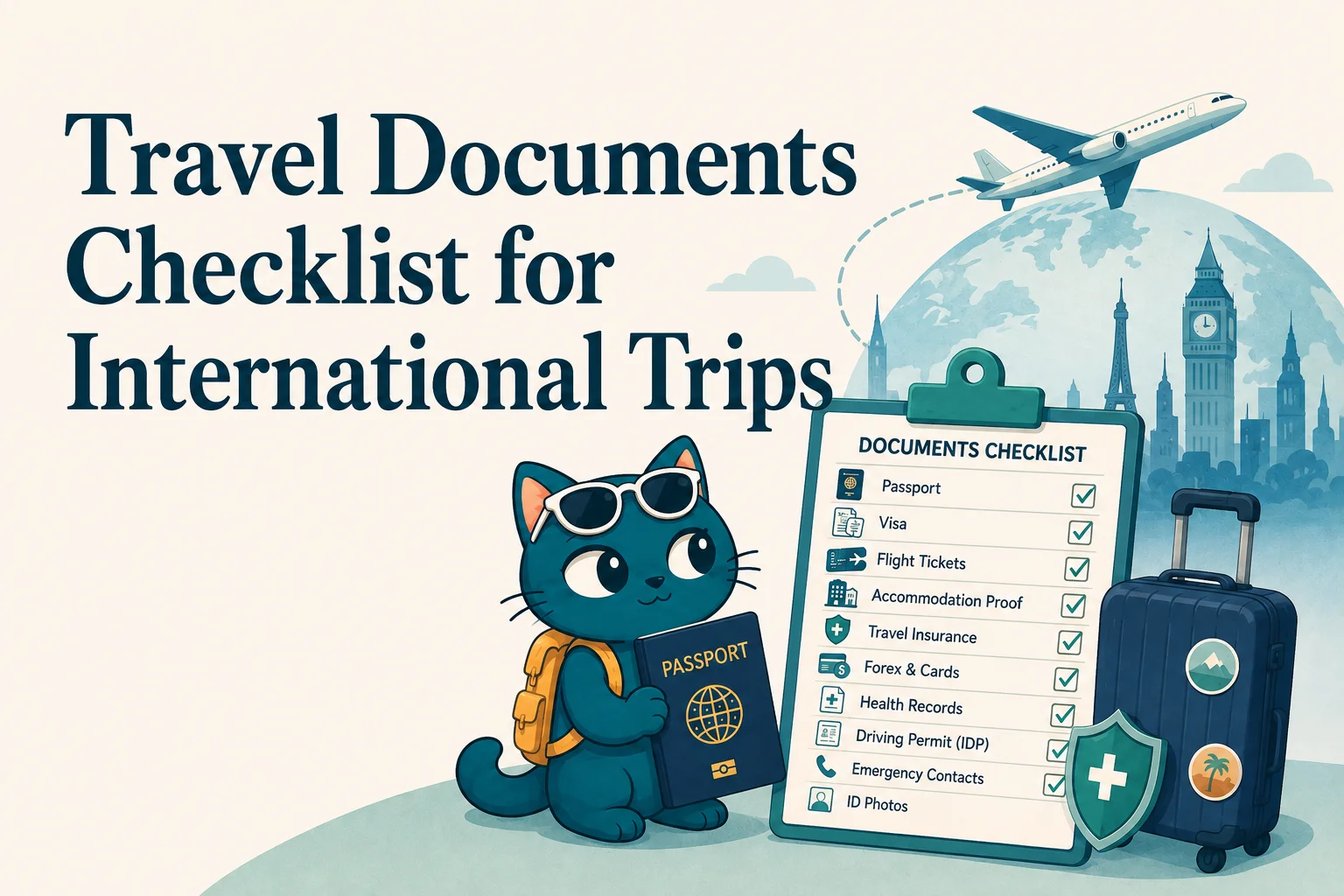
Nothing ends a trip faster than a document problem at the airport - an expired passport, a visa you thought was on arrival, a booking you cannot pull up. The good news: every one of these is avoidable with a checklist you run before you leave. Here is the full list of documents to carry for an international trip, the ones travellers most often forget, and how to keep a backup so a lost wallet is an inconvenience, not a disaster.
The documents every international trip needs
Start with the non-negotiables. Without these you either do not board or do not get let in at the other end:
- Passport - valid for at least six months beyond your return date (more on this below).
- Visa - confirmed before you fly, or a printed e-visa / visa-on-arrival eligibility. Never assume; rules change by nationality and destination.
- Flight tickets - your onward and return e-tickets. Some countries ask for proof of onward travel at immigration.
- Accommodation proof - hotel bookings or an invitation letter for the first few nights.
- Travel insurance - mandatory for several visas (Schengen, for example) and simply sensible everywhere else.
Print one physical copy of each, even in 2026. Airport Wi-Fi fails, phones die, and an immigration officer asking for a document is not the moment to be searching your email.
Check your passport validity first
This is the single most common reason travellers get turned away, and it catches people who have a "valid" passport. Most countries enforce the six-month rule: your passport must be valid for at least six months beyond your date of entry (some countries count it from your date of exit). A passport that expires in four months is effectively unusable for most international travel.
While you are at it, confirm you have at least two blank pages for stamps, and that the passport is not damaged - a torn or water-warped passport can be refused even if the dates are fine.
The paperwork people forget
Beyond the obvious, these are the documents that quietly cause problems - not because they are hard to get, but because they are easy to overlook:
- Forex and cards: some local currency for arrival, plus a card you have told your bank you will use abroad so it is not blocked as fraud.
- Health records: any required vaccination certificates, and a note of prescriptions - carry medicines in original packaging with the doctor’s prescription.
- Driving permit: an International Driving Permit if you plan to rent a vehicle - your home country licence alone is often not enough.
- Emergency contacts: the nearest embassy / consulate details, and your insurer’s 24x7 helpline.
- ID photos: a couple of spare passport-size photos - handy for on-arrival visas and lost-document replacements.
Keep a digital and a physical copy of everything
If your bag is lost or stolen, the difference between a bad afternoon and a ruined trip is whether you have backups. The rule is simple: one physical copy carried separately from the originals, and one secure digital copy you can reach from any device.
This is exactly what the Documents feature in MyTripDude is for - upload your passport, visa, tickets and insurance to the trip they belong to, and they are stored securely and available when you need them, even offline. Everything for one trip lives in one place instead of scattered across email, gallery and chat threads.
Store the digital copies somewhere access-controlled - not a public link or an unlocked photo gallery. These are your most sensitive documents; treat them that way.
Turn it into a checklist you reuse every trip
You should not rebuild this list from memory before every trip - that is how things get missed. Save it once as a reusable pre-departure checklist, then tick it off each time. The documents rarely change; only the destination-specific visa and health requirements do.
In MyTripDude you can keep a checklist template for exactly this and apply it to every new trip, so "documents ready" becomes a habit. Pair it with a realistic budget (see our guide on how to plan a trip budget) and the boring-but-critical half of trip prep is handled before you pack a single bag.
Frequently asked questions
What documents do I need for international travel?
At minimum: a passport valid for six months beyond your trip, the correct visa (or confirmed e-visa/visa-on-arrival), onward and return flight tickets, accommodation proof for your first nights, and travel insurance. Carry both a printed and a secure digital copy of each.
How many months should be left on my passport to travel?
Most countries require your passport to be valid for at least six months beyond your date of entry, and some count from your date of exit. Check the expiry as soon as you start planning, since renewal can take several weeks.
Do I need travel insurance for an international trip?
It is mandatory for some visas - Schengen countries require it - and strongly recommended everywhere else. It covers medical emergencies, trip cancellation and lost baggage, any of which can cost far more than the policy itself.
How should I store copies of my travel documents?
Keep one printed copy carried separately from the originals, and one secure, access-controlled digital copy you can reach from any device - ideally offline too (MyTripDude can help you with this). Avoid public links or an unlocked photo gallery, since these are your most sensitive documents.